Induction Coil Redesign for Piston Rod Annealing
Redesigned a custom induction coil to support a wider range of piston rod sizes, improve operator setup, reduce damage risk, and deliver more consistent heating in production.
Overview
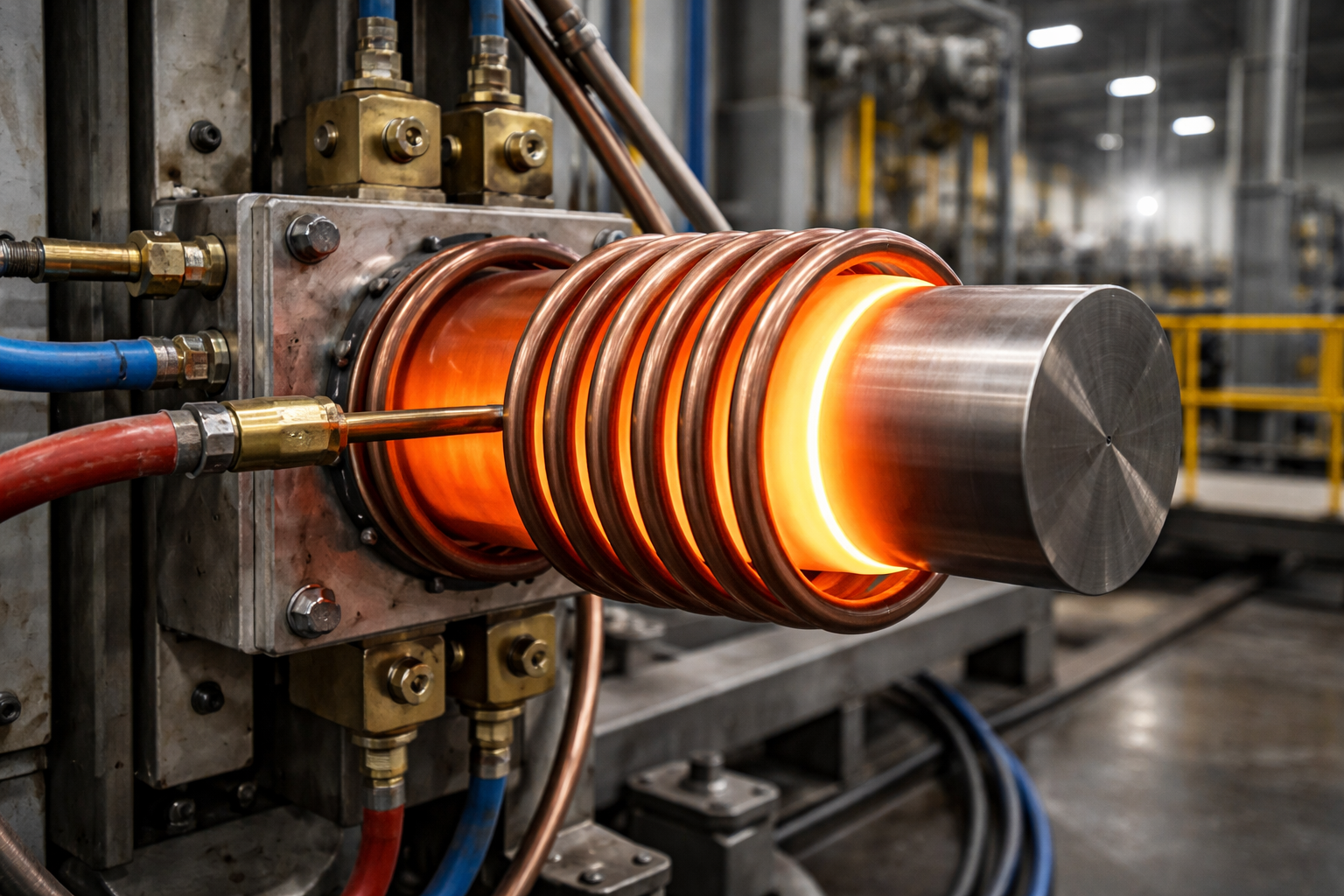
In Parker Hannifin’s piston rod department, induction heating was used to anneal rods as part of the manufacturing process. The existing induction coil setup was not well suited to the range of rod diameters and lengths used in production, which made setup difficult for operators and increased the risk of contact with the coil. After the original coil was damaged during use, I was tasked with developing a custom replacement that would better fit regular production rod sizes and improve the overall usability of the process.
The Challenge
The main challenge was designing a single induction coil that could accommodate the widest practical range of standard piston rod sizes while keeping each rod positioned as close to the center of the coil as possible. Proper positioning was important for more even heating and better process consistency. At the same time, the design had to make setup easier for operators, reduce the likelihood of accidental contact, and be practical to manufacture through an external supplier.
Approach
I began by reviewing the rod sizes used in regular production and taking the necessary measurements to understand the design envelope. I then used CAD to model the rod and coil geometry so I could evaluate how different diameters and lengths would sit within the coil. From there, I developed a custom coil design that maximized compatibility across standard rod sizes while improving alignment and ease of setup.
After finalizing the design, I prepared the drawing package and submitted it for supervisor approval. I then coordinated directly with the induction coil manufacturer by sending the required drawings, obtaining quote and lead time information, and supporting the purchasing process through approval. Once the coil arrived and was installed, I confirmed its performance with the operator to ensure it met production needs.
Results
The final custom coil was successfully manufactured and implemented in production. The new design improved setup across standard piston rod sizes, made the process easier for operators to use, reduced the risk of coil damage, and helped support more consistent rod positioning during annealing. The project served as both a corrective replacement after equipment failure and a continuous improvement to the original process.